

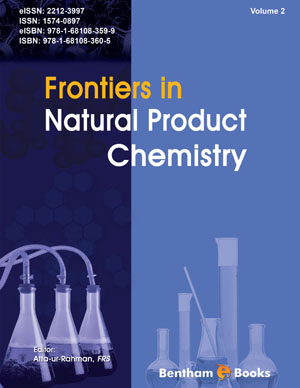
Abstract
Over the past two decades, biotechnologies have provided a motor for innovation and sustainability in many economies all around the world by developing new processes and products in a bio-economy approach. Besides food and feed, increasing interest on biomass derived fuels, chemicals and materials, sustainably sourced and produced, has raised, providing an alternative to heavy reliance on finite fossil fuel resources. One of the most innovative and promising sectors of the bioeconomy is related to bio-based products, obtained in part or entirely from organic biomass, which account for about 16% of world production of bio-economy’s products. Plant biomass is rich in high added value compounds; mainly antioxidants and fibres, which once extracted can serve as green fine chemicals or can be used in food supplements and/or nutraceutical sector.
A great deal of evidence has established that the secondary compounds of higher plants (i.e. polyphenols) inhibit and/or quench free radicals and reactive oxygen species (ROS) thus protecting against oxidative damage. These compounds can therefore be exploited as additives in a large number of different commodities, such as plastics and nanomaterials.
This chapter gives an insight into the relevant research results regarding the valorization of polyphenol fractions extracted from agricultural wastes, focusing on those derived from fruit production and transformation. Structure-activity relationships will be discussed in view of their use in the field of innovative materials.
Keywords: Bio-economy, Bio-materials, Plant wastes, Polyphenols.
Related Journals
Current Bioactive Compounds
Current Topics in Chemistry
Current Chinese Chemistry
Current Catalysis
The Natural Products Journal

Anti-Cancer Agents in Medicinal Chemistry
Combinatorial Chemistry & High Throughput Screening
Current Medicinal Chemistry
Current Analytical Chemistry
Current Computer-Aided Drug Design
Related Books
A Journey Through Water: A Scientific Exploration of The Most Anomalous Liquid on Earth
Advances in Mathematical Chemistry and Applications

Advances in Mathematical Chemistry and Applications
Advances in Mathematical Chemistry and Applications Volume 1 (Revised Edition)

Advances in Organic Synthesis
Advances in Organic Synthesis
Advances in Organic Synthesis
Advances in Organic Synthesis
Advances in Organic Synthesis
Advances in Organic Synthesis