

Abstract
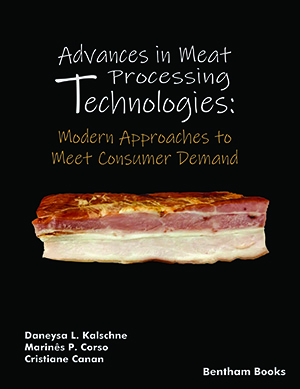
Meat products conventionally contain fat, saturated fatty acids, and high salt contents, as well as health-harming chemical additives, such as nitrites and synthetic anti-oxidants. The meat industry has been striving to find alternatives in order to meet consumer demands for healthier products, either reduced or free of such components. For this purpose, various studies have been carried out for alternative ingredients. Vegetable oils have achieved positive results as fat replacers. Methods such as preemulsion, emulsion-templated, microencapsulation, and oleogel formation (hydrogel or organogel) have been excellent on partial pork fat reduction, and consequently saturated fatty acids or n-3 PUFA-rich oils incorporation. Plant materials are seen as a good alternative for synthetic anti-oxidants. Various plant derivatives have been tested and presented anti-oxidant potential due to their bioactive contents, such as phenolic acids, phenolic diterpenes, flavonoids, and volatile oils. Other salts, especially potassium chloride, have stood out on replacing sodium chloride. The use of natural sources of either nitrites or nitrates, such as celery and powdered vegetable juice, has been suggested as their replacers, as well as the use of different compounds with potential natural food preservative characteristics. Overall, considerable progress has been made over the past few years in the field of non-meat ingredients as alternative to conventional ones, conferring a healthier approach to meat products. However, overall strategic approaches to meet one or more simultaneous demands, such as fat and salt reduction, among others, in terms of sensory, technological and microbiological efficiency ought to be encouraged.
Keywords: Animal Fat Replacer, Natural Anti-Oxidants, Nitrite-Free Product, n- 3 PUFA, Potassium Chloride, Salt Replacer.

Related Books

Micronutrients: The Key to Good Health
Green Extraction Techniques in Food Analysis

Functional Foods for Health Maintenance: Understanding their Role in Cancer Prevention
Vitamin D and Your Body Volume Title: Why Does Vitamin D Matter?

Advances in the Determination of Xenobiotics in Foods
Algal Functional Foods and Nutraceuticals: Benefits, Opportunities, and Challenges

Application Of Alternative Food-Preservation Technologies To Enhance Food Safety And Stability

Capillary Electrophoresis in Food Analysis
Current Developments in Food and Nutrition Research
Current Trends of Supercritical Fluid Technology in Pharmaceutical, Nutraceutical and Food Processing Industries