

Abstract
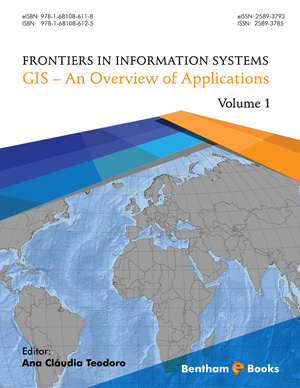
The spatial dynamics of landscapes are the consequence of a multiplicity of relations among physical, biological and social forces. So, it is essential the assessment of the driving forces related to Land Use and Land Cover changes (LULC) to understand the change process. The stochastic modeling technique in Geographical Information System (GIS) - Markov Chain (MC) analysis and Cellular Automata (CA) allows the predictions of future changes based on changes that have occurred in the past. This chapter aims to present a dynamic simulation model for LULC changes in ‘Sado Estuary’ and ‘Comporta-Galé’ Natura 2000 Sites (Portugal) for the beginning of the second half of the XXI century by using MC and CA. Regarding the quantification of the fragmentation processes and LULC changes in ‘Sado Estuary’ and ‘Comporta- Galé’ Natura 2000 Sites, these models are able to reveal non-obvious trends in the data and to describe ecological patterns. From an applied research point of view, this approach is useful to identifying adequate planning and management strategies for coastal ecosystems, for monitoring and planning natural and protected environments.
Keywords: Cellular Automata, GIS, Land Change Modeler, Land use and Land Cover, Markov Chains, Sado Estuary and Comporta Galé Natura 2000 Sites.
Related Journals
Recent Patents on Computer Science

Current E-Learning
Recent Advances in Computer Science and Communications

The Chinese Journal of Artificial Intelligence

Current Chinese Computer Science

Journal of Fuzzy Logic and Modeling in Engineering

International Journal of Sensors, Wireless Communications and Control

Current Computer Science

Journal of Intelligent Systems in Current Computer Engineering

Wireless and Communication Letters
Related Books
Computational Intelligence For Data Analysis

Applied Machine Learning and Multi-Criteria Decision-Making in Healthcare

A First Course in Artificial Intelligence
Artificial Intelligence: Models, Algorithms and Applications

Advanced Computing Techniques: Implementation, Informatics and Emerging Technologies

Handbook of Mobile Application Development: A Guide to Selecting the Right Engineering and Quality Features

Applications of Modern High Performance Networks

Arduino Meets Matlab: Interfacing, Programs and Simulink
Arduino and SCILAB based Projects

Application of Chaos and Fractals to Computer Vision