

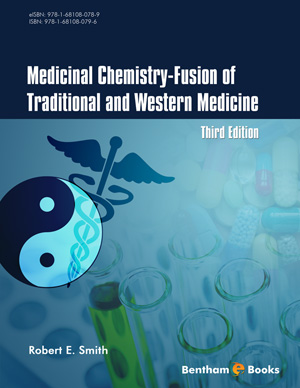
Abstract
Perhaps nothing epitomizes the fusion of traditional and western medicine more than predictive, preventive, personalized and participatory (P4) medicine. It takes not just a holistic but also a quantitative and mathematical approach to practicing medicine. Personalized medicine is designed for the specific genetic, epigenetic and environmental properties of patients and their diseased cells. Diagnoses, treatments and cures are improving for diseases caused by a single gene (Mendelian). As the costs of genotyping with microarrays and complete DNA sequencing continue to drop, new collaborative projects become possible. Biomarkers are being discovered through advanced genomic, proteomic, metabolomic and imaging technologies. This has a very high priority because they can improve the diagnosis of a disease, define subsets of patients and use appropriate therapies for them. Clinical trials are being modernized by automation and improved data management. Instead of just making the medicine specific for the DNA that a person is born with, it can be made specific for the mutated DNA that is in a type of cancer or other disease. This is being done by developing monoclonal antibodies, which will bind to receptors that are specific for a particular type of cancer. Some of them are even parts of FDA-approved medications. Most can’t kill cells by themselves, but they can still bind to cancer-specific antigens and deliver drugs that are covalently attached to the monoclonal antibody. Even treatments for diseases that are caused by many factors (genetic and environmental) are benefiting from P4 medicine.
Keywords: Avastin®, Biomarkers, Campath®, Erbitux®, Gene chips, Herceptin®, Metabolome, Next generation sequencing, Personalized medicine, Rituxan®, Vectibix®.
Related Journals
Current Chinese Science
Anti-Cancer Agents in Medicinal Chemistry
Current Computer-Aided Drug Design
Current Bioactive Compounds
Current Medicinal Chemistry
Current Topics in Chemistry
The Natural Products Journal
Current Catalysis
Current Chinese Chemistry
Combinatorial Chemistry & High Throughput Screening
Related Books
A Journey Through Water: A Scientific Exploration of The Most Anomalous Liquid on Earth

Advances in Mathematical Chemistry and Applications

Advances in Mathematical Chemistry and Applications

Advances in Mathematical Chemistry and Applications Volume 1 (Revised Edition)

Advances in Organic Synthesis
Advances in Organic Synthesis

Advances in Organic Synthesis

Advances in Organic Synthesis

Advances in Organic Synthesis

Advances in Organic Synthesis