

Abstract
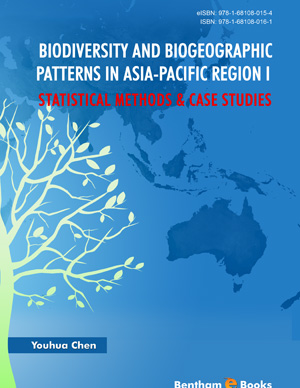
This chapter provides some metrics for measuring phylogenetic diversity, one of the most important diversity components in ecological studies. Phylogenetic diversity nowadays is widely used to evaluate the role of evolutionary history and evolutionary interaction among species on structuring contemporary biodiversity patterns and ecological community structure. The metrics for phylogenetic diversity could be divided into two categories: node-based and branch length-based metrics. For node-based indices, I and W give more weights on the sub-clades with fewer taxa. For branch-based metrics, the following metrics are introduced: total phylogenetic diversity, pendant edge, taxonomic distinctiveness, evolutionary distinctiveness, phylogenetic endemism, phylogenetic ancestral range index, and imperiled phylogenetic diversity index.
Keywords: Ancestor, Brownian motion of evolution, descendants, ecological indicators, evolutionary ecology, evolutionary history, external tips, extinction risk, molecular information, phylogenetic community structure, phylogenetic diversity, phylogenetic theory, statistical ecology, Tree of Life.







Related Books

Industrial Applications of Soil Microbes

Industrial Applications of Soil Microbes

Biomarkers in Medicine

Biopolymers Towards Green and Sustainable Development

Algal Biotechnology for Fuel Applications

The Wax Moth: A Problem or a Solution?

Taurine and the Mitochondrion: Applications in the Pharmacotherapy of Human Diseases

An Introduction to Mycosporine-Like Amino Acids

Bioremediation for Environmental Pollutants

Bioremediation for Environmental Pollutants