

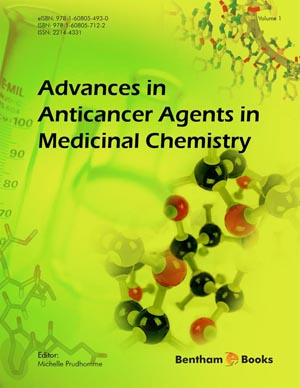
Abstract
Current cancer chemotherapy relies heavily on cytotoxic agents, such as the taxanes and Vinca alkaloids, that interfere with the cellular machinery required for cell division and divert the cell down a pathway of programmed cell death. These antimitotic agents, or spindle poisons, target the mitotic spindle by binding to tubulin, a protein required not only for mitosis but also for structural integrity and proper function of healthy, terminally differentiated cells. To avoid side effects attributed to this nonselective mechanism of action, new targets in the mitotic pathway that act only in dividing cells were sought and a leading candidate to emerge from these efforts was kinesin spindle protein (KSP or HsEg5). KSP is a molecular motor protein that is expressed only during mitosis and controls the formation of a functional mitotic spindle. Inhibition of KSP causes mitotic arrest followed by cell death in malignant cells and thus has the potential to become a novel chemotherapeutic strategy with the potential for reduced toxicity. This article summarizes efforts carried out at Merck to discover potent, selective and water soluble KSP inhibitors that culminated in the discovery of MK-0731, the second KSP inhibitor to enter clinical trials. Of special focus in this article is how an HTS lead was optimized in apparently divergent directions, but these disparate leads converged in the design of compounds that overcame P-glycoprotein efflux and hERG channel activity, two issues that required considerable optimization within our program.
Keywords: Kinesin spindle protein (KSP), Eg5, spindle poison, anti-mitotic, mitotic arrest, targeted chemotherapy, MK-0731, allosteric inhibitors, lead optimization, p-Glycoprotein efflux, PGP, MDR, IKr potassium channel, hERG channel, QT prolongation, water solubility, phosphate prodrugs, fluorine, amine basicity, pKa, xenograft studies, continuous infusion, neutropenia.
Related Journals
Current Chinese Science
Anti-Cancer Agents in Medicinal Chemistry
Current Computer-Aided Drug Design
Current Bioactive Compounds
Current Medicinal Chemistry
Current Topics in Chemistry
The Natural Products Journal
Current Catalysis
Current Chinese Chemistry
Combinatorial Chemistry & High Throughput Screening
Related Books
A Journey Through Water: A Scientific Exploration of The Most Anomalous Liquid on Earth

Advances in Mathematical Chemistry and Applications

Advances in Mathematical Chemistry and Applications

Advances in Mathematical Chemistry and Applications Volume 1 (Revised Edition)

Advances in Organic Synthesis
Advances in Organic Synthesis
Advances in Organic Synthesis
Advances in Organic Synthesis
Advances in Organic Synthesis
Advances in Organic Synthesis