

Abstract
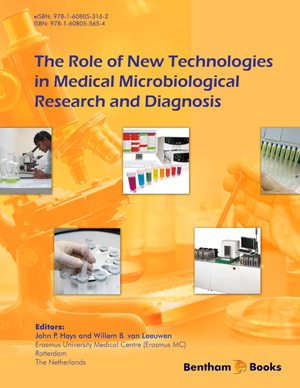
The social and financial impact of infectious diseases are unfortunately still very relevant today, and the development of new diagnostic tests with improved detection characteristics continues to be an important research priority. Currently, there is a demand for accurate and specific diagnostic tests that can be performed at the point-of-care without the need for dedicated equipment or highly trained personnel. In this respect, advances in the field of nanotechnology are already being utilized by several research groups around the world, and with very encouraging results. In fact, nanoparticles can now be conjugated to oligonucleotides, antibodies, and peptides, facilitating multi-labeling and hence multi-target detection, which (in the context of diagnostic applications) allows the genetic or immunogenic “footprint” of a microbial pathogen to be determined. Further, there exists a range of metal or polymer nanoparticle materials to choose from, and their choice is dependant on the properties of the material required. Here, we provide a concise description of the applications of 2 such materials, colloidal gold and quantum dots, which have already been utilized in several different applications that target pathogen detection. Emphasis is placed on the principles behind these novel applications, and the way in which the properties of nanoparticles are being used in the development of future microbiological applications.
Keywords: Nanoparticles, Quantum Dots, Functionalization, Quartz Crystal Microbalance, Dipstick, Biobarcode Assay.
Related Journals
Anti-Inflammatory & Anti-Allergy Agents in Medicinal Chemistry
Current Diabetes Reviews
Current Neurovascular Research
Current Respiratory Medicine Reviews
Current Pediatric Reviews
Infectious Disorders - Drug Targets
Current Stem Cell Research & Therapy
Endocrine, Metabolic & Immune Disorders - Drug Targets

Current Alzheimer Research
Current Aging Science
Related Books

Andrology: Current and Future Developments
Male Infertility: An Integrative Manual of Western and Chinese Medicine

Awake Thoracic Surgery
The Anatomical Foundations of Regional Anesthesia and Acute Pain Medicine Macroanatomy Microanatomy Sonoanatomy Functional anatomy
Frontiers in Anti-infective Agents
Frontiers in Anti-infective Agents

Frontiers in Anti-infective Agents

Frontiers in Anti-infective Agents

Frontiers in Anti-infective Agents

Frontiers in Anti-infective Agents