

Abstract
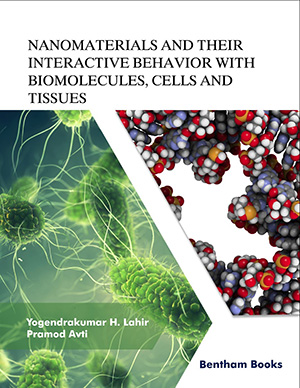
Genetic material is a stable biomolecule in an organism. The intact and integrated transfer of genetic information from the parental generation to the offspring (daughter cells) is essential. This transfer acts as a basis and ensures the conveyance of somatic and sex-linked traits from generation to generation. The DNA contains genetic information and is present in eukaryotes and prokaryotes, while viruses have genetic information either in DNA or RNA. The genetic information plays a prime role in maintaining structural, physiological originality and modifications by retaining the specific pattern of transcription, translation, and replication of genetic material during cell proliferation, cell cycle, cell differentiation, etc. Cellular behavior reflects on the structural, functional, and genetic health of a cell, tissues, and an organism. The formulations of nanomaterials are in concern with the targeted moieties. The nanomaterials have spread their tentacles in most of the fields following the functional and procedural aspects of the biological and non-biological sciences. Different types of nanomaterials are produced in order to meet the demands of various domains like biotechnology, biomedical sciences, industrial, material sciences, etc. Nanomaterials cause either beneficial or harmful effects in a biosystem and the environment. The disoriented biochemical, biophysical, and biomolecular impacts are due to the adverse effects of nanomaterials on genetic contents. This condition brings disorganized functionality of the genetic information and the cell. The evaluation of their implications on biomolecules like DNA and RNA is essential to understand the mechanism involved. This chapter deals with the overall biochemical, physiological, and biophysical aspects of genetic contents, along with the impacts of various types of nanomaterials
Keywords: Annealing, Bionanointerface, Carbon Nanomaterials, Dendrimers, DNA, Histone- Proteins, Hydrophobicity And Hydrophilicity, Quantum Dots.
Related Books
Advanced Materials and Nano Systems: Theory and Experiment - Part 2
Advanced Materials and Nano Systems: Theory and Experiment (Part-1)
The Art of Nanomaterials
Nano Materials Induced Removal of Textile Dyes from Waste Water
Nanobiotechnology: Principles and Applications
Bio-Inspired Nanotechnology
Synthesis of Nanomaterials

Materials Science: A Field of Diverse Industrial Applications
Synthesis and Applications of Semiconductor Nanostructures
Industrial Applications of Polymer Composites