

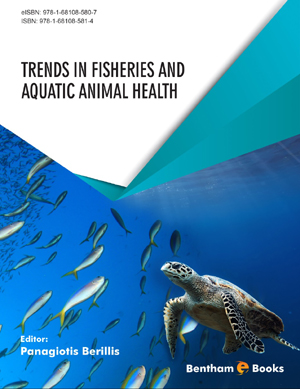
Abstract
In addressing the issue of Mediterranean aquaculture, and having the fact that the aquaculture sector is partly associated with the relevant European Common Fisheries Policy, the study provide both global and European circumstances relevant for current state, growth target and future challenges. Marine aquaculture, in the Medterranean has shown a rapid growth in 1990s, and by the time became an important source of seafood, employment and income. However, it has not progressed significantly over the last decade, due to several factors that influence performance of the main fish species production. Replacement with ingredients from plant origin has influenced FCR, presence of mycotoxins in feed and micro ingredient deficiency Many breeding, health and welfare issues still remain unresolved. Lack of spatial planning on the integrated principles, access to quality fish feed, eggs and fry, has restricted aquaculture in some developing countries. Complicated administrative procedures related to national and regional environmental regulations were constraining aquaculture development in many EU-Mediterrenan states. Fragmented approach to marketing of mariculture products requires a cooperation of different actors across the Mediterranean. Vision for 2030 has projected doubling finfish production. However, for such a development a set of practical solutions are needed in production, governance, cooperation, policy management, market development, and spatial planning. If aquaculture tends to meet its goals, it must improve production models and environmental performances. It is expected that future production economy may take advantage of diversifying species and combining land based recirculating aquaculture systems (RASs) with more open sea farming by employment of more robust cage installations. Integration with non-fed organisms is a promising option in achieving better economic and environmental benefits.
Keywords: Challenges, EU-Mediterranean context, Fish nutrition, Future direction, Global aquaculture, Health management, Public concerns, Spatial planning, Standards.





Related Books
Industrial Applications of Soil Microbes
Industrial Applications of Soil Microbes
Industrial Applications of Soil Microbes

Biomarkers in Medicine

Biopolymers Towards Green and Sustainable Development
Algal Biotechnology for Fuel Applications
The Wax Moth: A Problem or a Solution?

Taurine and the Mitochondrion: Applications in the Pharmacotherapy of Human Diseases

An Introduction to Mycosporine-Like Amino Acids
Bioremediation for Environmental Pollutants